
How can publishers turn fragmented attention into lasting reader relationships?
Seven signals from INMA Media Innovation Week 2026 in Madrid show how publishers are rethinking audience relationships, trust, formats and newsroom workflows for 2027.

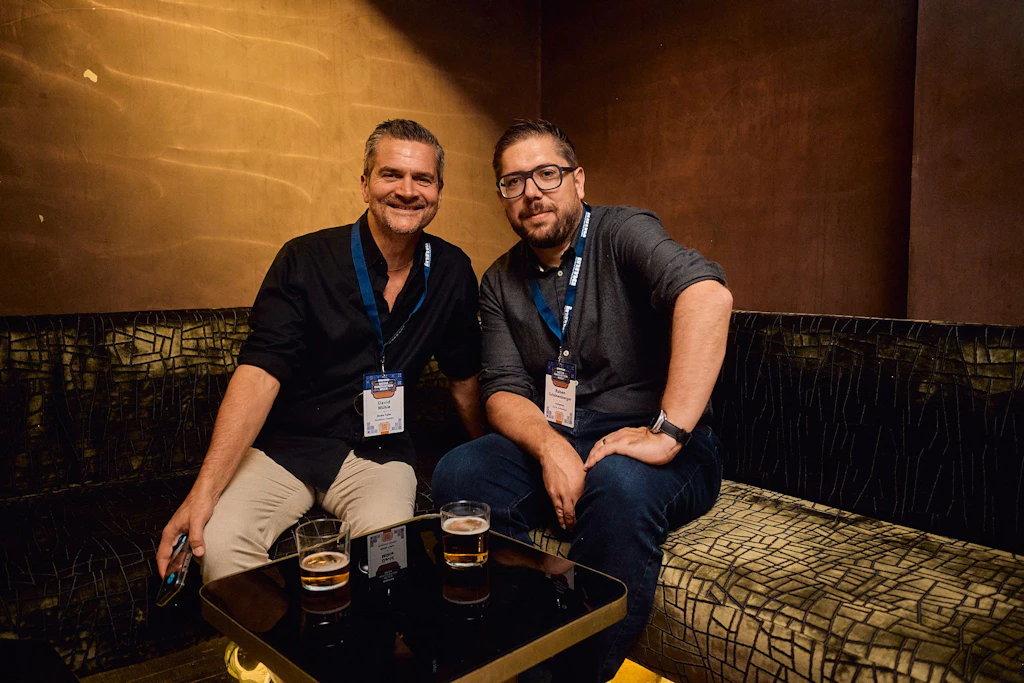
Publishing is changing. I attended the INMA Media Innovation Week 2026 in Madrid and came back with a clear picture of how exactly this change is happening and what media companies should carry into 2027.
The strongest message was not about a single channel or technology. It was about relationships. Publishers need to know who their most valuable readers are, give them more ways to enter, build trust through recognisable people, and make new formats part of everyday editorial work.
Here are seven lessons that stood out, and what they mean for Livingdocs.
From traffic to relationships
1. Every touchpoint has to become a welcoming door
Discovery is fragmenting.
Readers increasingly arrive through side doors, while publishers cannot own the funnels end to end.
«Most people arrive through a side door, you cannot own the funnels end to end»

What the numbers show.
Google organic traffic to publishers fell by 33% in one year. AI Overviews now appear on 46% of Spanish search results, up from 30% eight months earlier, especially around evergreen topics.

How publishers are responding.
The response is not to find one replacement for search. It is to open more doors. Die Zeit uses gift articles and lets readers follow authors. Finansavisen personalises its homepage with rules editors can inspect and override; its churn fell from 69% to 58%.
-> Livingdocs perspective
Livingdocs can act as one source for web, apps, newsletters and push, while editors retain control through curated lists, rule-based teaser lists and exposure boosts. What happens after publishing is the next chapter: reader-level personalisation, follows and gift articles build on user and usage data, which typically lives in dedicated reader-data systems alongside the CMS.
2. The known reader matters more than the anonymous visit
Heavy users drive disproportionate value.
Publishers are losing casual readers, not their heaviest users. That makes the known, engaged reader, rather than the isolated visit, the real business. 1% of users generate 27% of pageviews and up to 81% of revenue.
«Reach the ones that count, don’t count the ones you reach.»

What this changes for publisher marketing.
The question is no longer only how many people were reached, but whether the relationship with the people most likely to return was deepened. Newsletters, apps and push notifications matter because they create repeatable, owned relationships.

-> Livingdocs perspective
Livingdocs supports content delivery to those logged-in products through its API. The next step is identifying super users and tailoring experiences around them. With reader and usage data flowing in through analytics and recommendation integrations, this becomes the natural next layer.
From brand reach to human trust
3. Trust is moving from the masthead to the person
People are becoming distribution channels.
Named journalists are increasingly becoming products in their own right. De Telegraaf’s personal newsletters from individual journalists achieve open rates of 70–85%. The point made in Madrid was simple: faces matter more than logos.
How publishers are responding.
The same pattern appears on social. DPG/HLN and Beobachter build channels around a consistent host, Funke around two. Creators also rank highly on trust and want to work with traditional media, even though many do not feel taken seriously by it.
What this changes for publishers.
This is both an editorial and a marketing opportunity. Journalists, hosts and creators can become recognisable entry points into a publication. Their names, expertise and voices create continuity across newsletters, social channels and the publication itself.
-> Livingdocs perspective
Livingdocs already supports managed author profiles with names, biographies and photos, linked to articles and bylines. Personal newsletters can be built with dedicated newsletter content types. The next layer would be allowing readers to follow authors and giving external creators suitable workflows and clear labelling.

4. Reach young audiences on social, then convert them on owned channels
Young audiences are being converted through owned products.
Free access for younger readers, with age caps ranging from the mid-20s to 30, appeared repeatedly as a way to bring them into a direct relationship with a publisher. NTM reported 400% growth in young subscribers, with 90% of them completely new readers. DPG/HLN gained 50,000 subscriptions in a single day.
How the channel roles divide.
Social platforms create reach, while owned channels create the relationship. The publication, newsletter or app is where a passing viewer can become a known reader.
-> Livingdocs perspective
Livingdocs helps publishers turn social reach into conversion through owned channels, with structured content for newsletters, landing pages, and video-rich articles.

5. Strong relationships also happen beyond the article
Publishers are building relationships beyond articles.
Several publishers are extending their brands into experiences and habits that do not look like a conventional news article.
Where those relationships are being built.
Monocle runs shops in six cities and events for groups as small as 12. Diario Vivo has staged 35 live journalism shows that are never recorded. Euractiv – now rebranded Rapporteur – runs events, while Politiken has moved engagement from the comment section to in-person debate.
How habit products contribute.
Tamedia brought its puzzle audience back in under six months, with 98.6% of players returning. Its biggest lever was not a complex campaign, but prominent placement in articles and newsletters. Tamedia describes the product honestly as „a habit engine, not (yet) a business.“ El País uses newsletter courses in five to eight parts, with the first part free.
-> Livingdocs perspective
Livingdocs supports the editorial journey around an event: promotion and programmes to speaker profiles, live coverage and recaps, across websites, apps and newsletters.
From tools to working systems
6. Video is a workflow challenge before it is a technology challenge
Workflow determines whether video scales.
Amedia increased video views by 286% after improving its publishing workflow with vertical templates and a Reels format. By contrast, VG’s one-click text-to-video tool is used less and less because it still feels like an extra task. At Sandefjords Blad, footage moves directly from the scene into the CMS, saving 10–30 minutes per incident.
What the examples show.
Video grows when it fits the daily newsroom workflow, not merely when a new tool is available.
-> Livingdocs perspective
Livingdocs already manages video in the media library, keeps its file metadata and connects external systems through an import API. The signal from Madrid points to where this grows next: easier capture from the scene, vertical templates and smoother distribution to multiple platforms. Text-to-video is a promising addition wherever it removes work from the newsroom rather than adding a step.

7. AI adoption is an organisational challenge
AI adoption starts with organisation, not tools.
Sanoma brought AI to 650 journalists by starting with workflow problems and spending 1,380 hours coaching people side by side. It did not begin with a broad tool rollout. Politiken standardised vibe coding through shared rules and brand guidelines.
What this changes for publishers.
AI needs ownership, governance and a defined place in the workflow.
-> Livingdocs perspective
Livingdocs gives editors an assistant framework right where they work, with commands and buttons inside the editor. Tagging, user-needs classification and machine translation plug in through integrations, and embeds and includes offer a controlled path for publishing new features. Publishers bring their own language model, so they keep control over model choice, data handling and cost. Madrid confirmed what matters most: AI earns its place when it solves a real newsroom problem and becomes part of everyday work.
What publisher marketing should take into 2027
Five priorities:
1. Optimise for known readers, not only traffic.
Reach still matters, but repeat relationships are the stronger business signal.
2. Build distribution around people as well as brands.
Journalists, hosts and creators can become trusted front doors.
3. Use social for discovery and owned channels for conversion.
The handover between the two deserves as much attention as either channel alone.
4. Design the workflow before choosing the tool.
This is especially true for video and AI.
5. Create more reasons to return.
Newsletters, games, courses, events and in-person formats can turn occasional attention into habit.
What this means for Livingdocs
The strongest fit with these shifts is Livingdocs’ ability to manage structured content once and deliver it to many destinations, while keeping editors in control. Editor-managed homepages, newsletters, author profiles, interactive embeds, assistant integrations and reusable components already support many of the approaches discussed in Madrid.

The main lesson from INMA Media Innovation Week is not that publishers need more isolated tools. They need stronger relationships with readers, supported by workflows that help editorial teams build those relationships consistently across every channel.
Explore how Livingdocs could support your editorial workflows and publishing channels.