
AI in Newsrooms: Trust, Editorial Control and Workflows | Livingdocs Summit 2026
AI is moving from experiment to everyday newsroom infrastructure. Publishers now face a practical question: how can they use AI to improve planning, production, and distribution without giving up editorial control or audience trust? At the Livingdocs Summit 2026, we explored this together with speakers from the F.A.Z., the Reuters Institute and WallnerMedia.

At Livingdocs Summit 2024, we hinted that something was taking shape with the Frankfurter Allgemeine Zeitung. Two years later, that collaboration brought the Livingdocs Summit 2026 to the F.A.Z. Tower in Frankfurt, with conversations around the topics of journalism, product, distribution, technology, and organizational change.
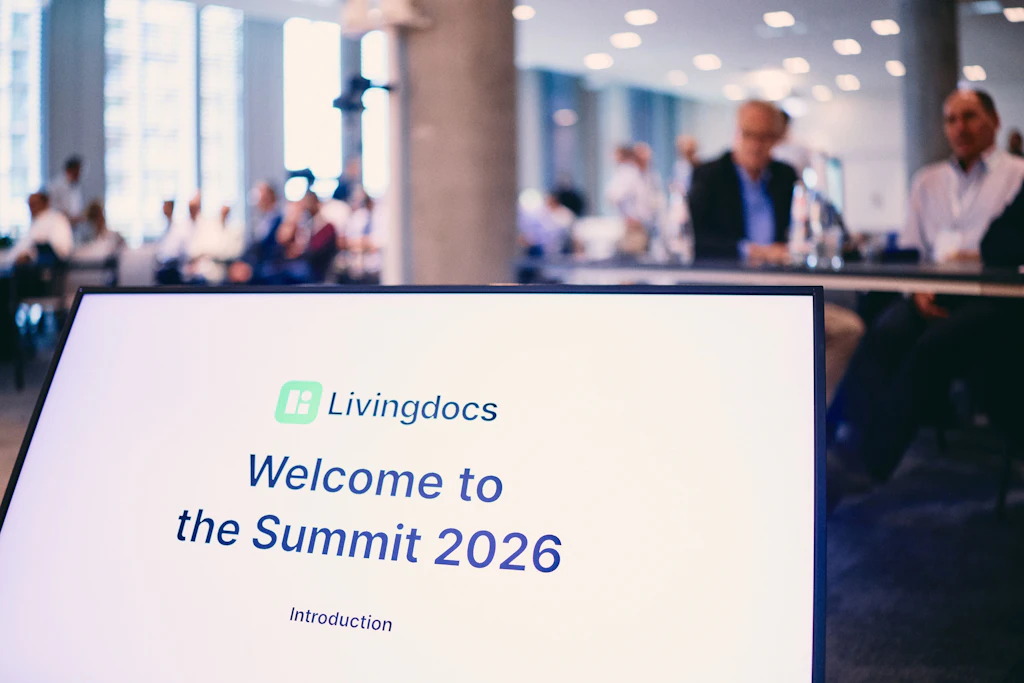



Two days. Four lessons. One big question: How can publishers use AI without losing trust?
Across those two days, publishing leaders approached this question from different directions. One principle kept resurfacing: machines can support the work, but people must remain visible, accountable, and in control.
Make trust visible.
Clearly show the author, sources, and editorial responsibility.
Editors, publishers and journalists stay in control.
AI makes transparent, reviewable suggestions; editors make the final decisions.
Connected workflows enable useful AI.
Bring planning, creation, review, and distribution into one governed system.
Journalism must travel across formats and platforms.
Adapt stories for different formats and platforms without losing their identity, authority, or value.
Take our short survey about your experience at Livingdocs Summit 2026, your newsroom’s workflows and challenges, and where AI could help.
Why this matters now
AI is becoming standard newsroom infrastructure, but audience trust and comfort with fully AI-generated news is still limited. That gap makes visible responsibility, clear sourcing, and governed workflows the deciding factor for using AI without damaging the brand.
Lesson 1: Trust is built through truth and brand
When synthetic content becomes abundant, publishers earn trust by standing visibly behind the truth. Carsten Knop, Publisher at the F.A.Z., opened the Summit with "The End of Truth: Media in a Race against Algorithms."

Carsten Knop cited the Reuters Institute Digital News Report 2026, which found that trust in news had fallen in most markets.
Trust and AI in news: key numbers from The Reuters Institute Digital News Report 2026 and the Reuters Institute’s Generative AI and News Report 2025
37%
of people trust the news most of the time
62%
of people worry about fake news online.
12%
are comfortable with news made entirely by AI.
21%
are comfortable with news when there is a "human in the loop"
43%
are comfortable with news when a human leads with AI assistance.
These figures show that audiences are more comfortable when editors remain responsible for the news.

Regulation is moving in the same direction. Article 50 of the EU AI Act has applied since 2 August 2026. In March 2026, the European Commission signed a €5 million grant to strengthen independent fact-checking.
The consequences are real and immediate. In a widely reported Arup case, an employee transferred about US$25 million in 15 transfers after a deepfake video call. Trust therefore has to be built into the product and workflow.
Brand is central to trust. Cai Tore Philippsen, Managing Editor at FAZ.NET, captured this in "Don’t hurt the brand!". Technology should improve the newsroom without weakening its editorial voice and standards.

The F.A.Z. in numbers:
10.2 million
readers and users
300'000
digital subscriptions
70%
of usage happens on mobile
The lesson is to make change serve the publication’s identity, standards, and value.

With trust established as the standard, the next question is how AI can support newsroom work without disappearing into an invisible, untraceable process.
Lesson 2: AI should be a visible colleague, not a black box
AI readiness depends on connected, structured work that people can review. That means four principles.
Keep the work connected.
Bring planning, media, writing, review, and publishing into one workflow, so editors and assistants can work from the same context.
Give AI only the context it needs.
Define which content, sources, permissions, and editorial rules the assistant may use.
Make suggestions visible.
Let the assistant propose changes where editors already work, rather than making silent changes in the background.
Let editors decide.
Editors should be able to accept, reject, correct, or ignore each suggestion before anything changes.
A trustworthy assistant needs relevant context, explicit access, and a visible place in the workflow. It can support repetitive tasks, but editors retain judgment, responsibility, and authorship.
In its Trends and Predictions 2026 of news leaders, the Reuters Institute found that :
67%
of publishers had not saved any jobs through AI so far
16%
of publishers had slightly reduced staff numbers
9%
of publishers had added jobs
Disconnected tools force people to transfer context, creating extra handovers and gaps in the history. A connected content system provides a safer foundation where work is structured, governed, and reviewed in one place.
This is exactly the direction Livingdocs is heading. CEO of Livingdocs Gabriel Hase presented the Livingdocs Vision and Roadmap: planning, media, and agency work from three disconnected systems could come together in one connected workspace alongside the Article Editor, Print Connect, Digital Edition, and Ticker.

AI is central to how this connected workspace will work. Livingdocs CTO and Head of AI Lab Lukas Peyer presented the Command Center, starting with proofreading for spelling and grammar. Later applications could support tone of voice, planning, research, user needs, image selection, distribution, and fact-checking.
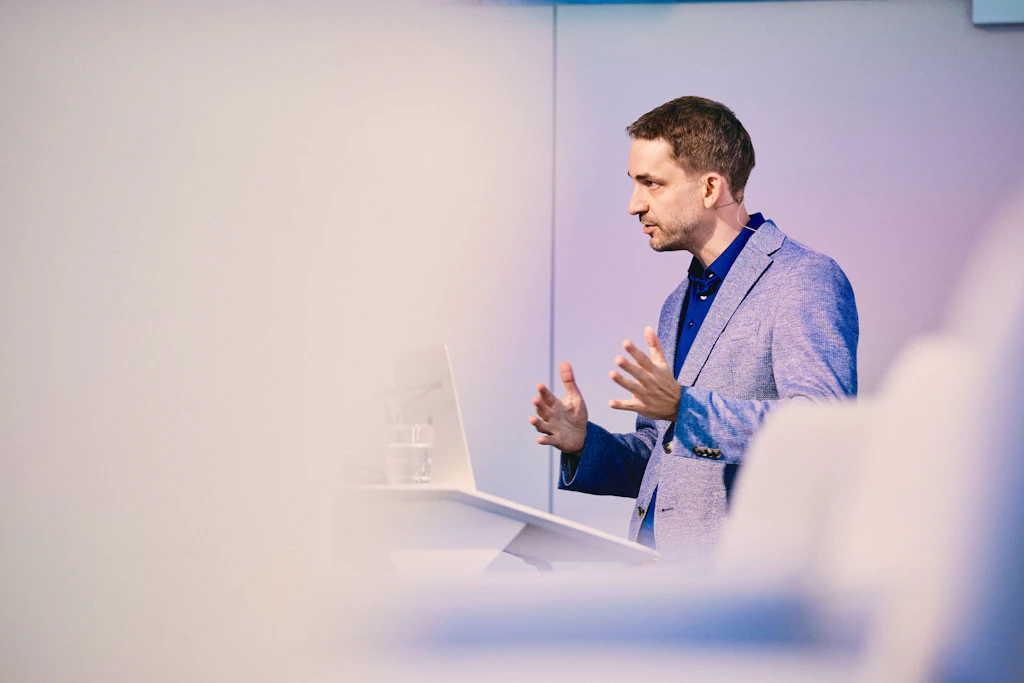
The principle is simple: assistants, not authors. They can help write, check, and prepare, but editors remain responsible for the piece.
The Livingdocs roadmap also presented read-first MCP access for Q1 2027, enabling newsrooms to connect their own agents. Editing access is planned to follow.

The principle we’re taking forward:
A useful AI colleague makes its contribution visible, works within clear boundaries, and leaves the final call with the editors whose judgment gives journalism its value.
Interested in exploring responsible AI assistance?
Bring us one real editorial workflow and explore how AI can support it while editors remain in control. We are looking for pilot partners to test this model with you over a commitment of roughly six months.
Lesson 3: The news product is changing around the article
Audiences increasingly encounter journalism as answers, summaries, clips, posts, and recommendations. Publishers need products that travel without losing their source, authorship, and authority.
Nic Newman, Senior Research Associate at the Reuters Institute for the Study of Journalism at the University of Oxford presented research across 48 markets and a survey of 280 news executives from 51 countries and territories.

A few headline figures from the Reuters Institute’s 2026 Trends and Predictions survey help quantify how discovery and distribution are shifting:
-43%
is the expected decline in search referrals over the next three years.
75%
of publishers expect significant impact from agentic AI.
79% and 71%
of publishers are prioritizing more video and more audio, respectively.
The Reuters Institute Digital News Report 2026 also show that:
54%
of people get news via social and video networks.
51%
of people get news via websites and apps.
This does not make journalism less important; it makes distinctiveness more important. Clear structure, visible authorship, transparent sourcing, strong metadata, recognizable experts, video, audio, and useful context help reporting travel while preserving its origin.

But reaching audiences is only half the challenge: publishers also need the connected foundation that makes this kind of work possible.
Lesson 4: AI readiness begins with connected workflows
AI readiness starts with the content and workflow foundation, not another AI tool. If planning, creation, review, media, publishing, and reuse remain fragmented, every assistant inherits that fragmentation.
Dietmar Wallner, owner of wallnermedia, described the transition through three generations of newsroom technology:
Classic consolidation.
Replace older systems, create a shared editorial surface, and standardize APIs, formats, and storage.
Contemporary digital-first production.
Add integrated media and planning, newsletters, e-paper, and channel workflows.
Future agent-based model.
Introduce governed agents around a stable content core for sourcing, translation, editing, enrichment, proofreading, summarizing, tagging, publishing, and measurement.

Editors remain responsible for the brand, the story, and editorial judgment. A modern content platform can be the operational foundation for people, automation, channels, and business models.
The practical test is simple: can the system provide the right context, limit access, and let editors review every important action? If not, AI only scales the underlying disorder.

With trust, visible assistance, and connected workflows in place, the final question is what all of this should ultimately optimize for.
Conclusion: Better journalism matters more than maximum automation
The goal is not maximum automation, but better journalism.
The strongest newsroom will use AI to help editors do better work, not replace the professionals who provide judgment, responsibility, and voice. Automation should keep those human qualities visible.
In short: trust and brand set the standard, connected workflows create the conditions, visible assistance preserves responsibility, and new formats help journalism travel.

What this means for Livingdocs
Livingdocs is building a newsroom workspace where content, planning, media, review, and distribution stay connected, and where AI works visibly within each publisher’s permissions and standards. AI supports the work, while editors retain judgment, authorship, and accountability.
Frequently asked questions
Should AI write news articles?
AI can support research, checking, drafting, translation, summarizing, metadata, and other editorial tasks. An editor must remain responsible for the final piece and its consequences.
What does human-in-the-loop mean in a newsroom?
It means showing what the assistant proposed, why, which sources or rules informed it, what the editor accepted or rejected, and who approved the result.
Why do connected workflows matter for AI?
Assistants work more safely with structured content, shared context, explicit permissions, editorial rules, and visible history. Disconnected tools make context and actions harder to govern.
How can publishers introduce AI without weakening trust?
Start with bounded, reviewable tasks. Be transparent about AI use, keep sources and permissions clear, preserve editorial voice, measure quality as well as efficiency, and keep an editor accountable for publication.
Thank you for joining us in Frankfurt for Livingdocs Summit 2026. It was two days filled with thoughtful conversations, sharp insights, and genuine energy.
A special thank you to the F.A.Z. for co-hosting us in its landmark tower and to our speakers Carsten Knop, Cai Tore Philippsen, Nic Newman, and Dietmar Wallner. Thank you as well to Gabriel Hase and Lukas Peyer for sharing where Livingdocs is headed next, and to Céline Tykve for moderating the program throughout both days.
Thank you again for being part of our adventure. We're already looking forward to the next summit.



Want to relive the Summit? Browse all the photos from the event or look back at the presentations.
Tell us what you want to explore next: smoother publishing workflows, responsible AI assistance, and connected newsroom tools that keep editors in control. You can also share your feedback on Livingdocs Summit 2026.
If there's one idea that echoed throughout the Summit, it's this: AI can help, but the human always stays in the loop. This article is no exception: it was made by our team with the help of AI, and reviewed, edited, and fact-checked before publication.